
Central kitchen management software for commissaries and internal supply
A central kitchen isn't just where food is produced, it's the internal supplier behind every restaurant, hotel outlet, event, franchise or business unit. tSpoonLab connects central production, storeroom management, internal ordering, transfer pricing, distribution and cost control in one operational system.
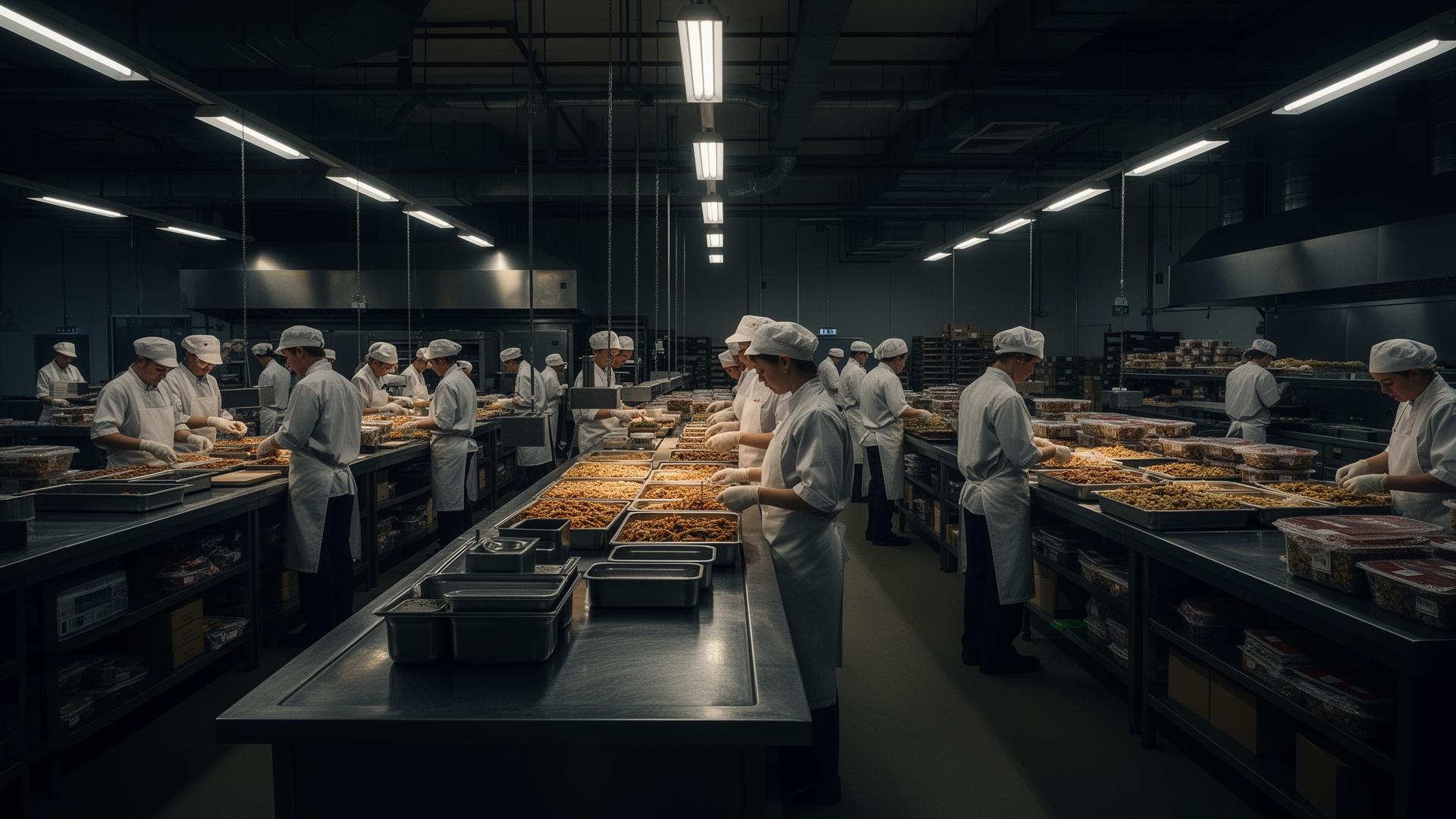
More than a kitchen, your internal supplier
tSpoonLab turns your central kitchen into a controlled internal supplier, managing what each unit can order, in which format, at which price, with stock, production, purchasing, dispatch and traceability connected.
Most software treats a central kitchen like a restaurant with higher volumes. In reality it's two things at once: a manufacturing operation, and the internal supplier for every unit in your group. It doesn't only distribute the food it produces, it also receives, stores and redistributes raw materials, drinks, packaging, cleaning products, chemicals, amenities and room-service items. tSpoonLab manages the whole internal supply chain, not just the production line.
Central kitchen, storeroom and internal supply
Your central operation supplies far more than cooked food. Through tSpoonLab, the central kitchen and storeroom can supply each unit with everything it needs to operate:
- Own productions and recipes, sauces, stocks, portioned meats, bases, mise en place.
- Ingredients and raw materials.
- Drinks and beverages.
- Packaging.
- Cleaning products and chemicals.
- Amenities, linen and room-service items.
- Any centrally purchased item that is received, stored and redistributed, not necessarily produced.
Not every internal supply flow requires production. Some products are produced, others are simply received, stored, split, priced and redistributed.
Internal clients, catalogues and controlled ordering
In tSpoonLab, each cost center or business unit is configured as an internal client of the central operation, every restaurant, hotel outlet, franchise, stadium area or business unit. Each one has its own internal catalogue: what it can order, in which format, at which price.
Minimum formats and transfer prices
You don't just supply products to a unit, you define exactly what each unit can order and in which minimum format. For example:
- A case of Coca-Cola in 24 units, supplied only as a full case.
- A product that can be supplied per unit when a location has limited storage.
- A packaging box holding 100 bags of 1,000 units, release a single bag of 1,000 without shipping the whole box.
- Internal productions, sauces, stocks, portioned meats, bases, mise en place.
And every transfer carries a price you control:
- At cost.
- With a markup to cover transport, labour or structure.
- With a commercial margin when working with franchises.
- With format-specific pricing.
- With different prices per internal client or channel.
Outcome:
Internal supply stops being an untracked cost and becomes a governed, priced and profitable flow, even across franchises.
Receive once, split and redistribute
A central storeroom rarely consumes what it buys, it breaks it down. tSpoonLab manages the split-and-redistribute flow that defines a real central store: receive in bulk, break into the formats each unit needs, price them, and redistribute, with full traceability on every split.
- Receive a large case or pallet centrally.
- Break it into the minimum formats each unit can order.
- Apply the right internal price per format.
- Redistribute to each unit, with stock and cost updated on both sides.
Examples: packaging, drinks, amenities, cleaning products and chemicals, received in bulk, split and supplied to each unit in the format it actually uses.
Outcome:
The central store turns bulk purchasing into controlled, per-unit internal supply, with traceability preserved through every split.
From internal demand to production and purchasing
This is the circuit that sets central kitchen management apart from simple production. Internal orders don't just get fulfilled, they drive the entire supply chain:
- Units place internal orders to the central operation.
- Each order automatically generates an internal sale or transfer in tSpoonLab.
- The central operation groups those to plan production.
- When stock isn't enough, the system identifies what must be purchased from suppliers.
- Then it's produced, prepared, labeled, dispatched and received at each unit, with cost allocated back.
Outcome:
One connected circuit, from a unit's internal request all the way to supplier purchasing, production and cost allocation.
Yield tracking and full traceability
In a central kitchen, yields determine real cost. A recipe that costs €2.40 in ingredients may cost €3.10 when accounting for production losses:
- Batch and lot tracking from raw materials through finished products
- Production date and expiry management per batch
- Allergen information linked to every item in the chain
- Yield variance monitoring to identify process inefficiencies
- Full audit trail from ingredient receipt to final distribution
Outcome:
Traceability becomes an operational tool, not just a compliance checkbox.
Real cost, margin and internal pricing
Most operations know what ingredients cost. Few know what their finished products actually cost after production, and even fewer know the margin on what they transfer internally. tSpoonLab connects both:
- True cost per recipe and batch, including yield impact.
- Internal transfer price, markup and margin per unit, format or channel.
- Margin visible at both the producing centre and the receiving unit.
- Cost and margin allocation across locations, concepts, channels or franchises.
- Historical cost trends to identify operational drift.
Centralized control is not limited to food cost, it also covers the operating supplies each unit consumes (packaging, cleaning, chemicals, amenities, linen).
Outcome:
The central kitchen becomes a governed internal supplier with full financial visibility, every transfer priced, costed and traceable across the group.
Automated labeling and compliance
Central production facilities face strict regulatory requirements. tSpoonLab integrates compliance directly into the production workflow:
- Auto-generated labels with ingredients, allergens and nutritional data
- Production and expiry dates calculated from recipe parameters
- Batch codes for full backward and forward traceability
- Regulatory-ready documentation for audits and inspections
Outcome:
Compliance is embedded in operations, not added as an afterthought.
Connected to your entire operation
A central kitchen management system only works if it integrates with the rest of the operational ecosystem:
- POS systems for demand data and sales mix analysis
- ERP and accounting platforms for financial consolidation
- Supplier portals for procurement and invoice matching
- Satellite kitchen operations for unified inventory control
Related resources
Central Kitchen PlaybookFrequently asked questions
Structure your internal supply operation
If your operation produces and supplies centrally for multiple units, locations or franchises, we'll help you define the right production, internal supply, pricing and cost control structure.
Schedule discovery call